
Toledo’s Search for Collective Understanding
Ma Rainey's Black BottomThis thread follows Toledo’s attempts to interpret Black history and community life, and ends when his reflective presence is destroyed by Levee’s violence.
increasing Bearing strength in each event
 decreasing
Bearing strength in each eventdecreasingThe Reader in the Band
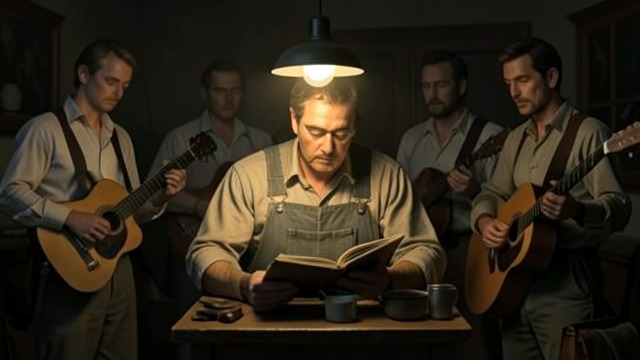
An intellectual among working musicians
Knowledge and distance
Toledo is the only member of the band who can read, and he often draws on what he has learned to interpret the people and situations around him. His education is self-directed and imperfect, but it gives him a habit of looking for patterns beyond the immediate quarrel.
That habit makes him a distinctive presence among musicians who have spent years working together on the road. He can recognize a larger meaning in everyday behavior, yet his way of explaining it often leaves the others impatient or unconvinced.
A life still in motion
Toledo does not present himself as someone who has always been wise. In later conversation he recalls being young, married, and deeply attached to a woman who eventually left him after joining a church.
His reflective manner has been formed by losses as well as reading. He can admit that he failed to understand what his wife needed, and he treats that recognition as a lesson rather than a reason to condemn her.
History in the Stew
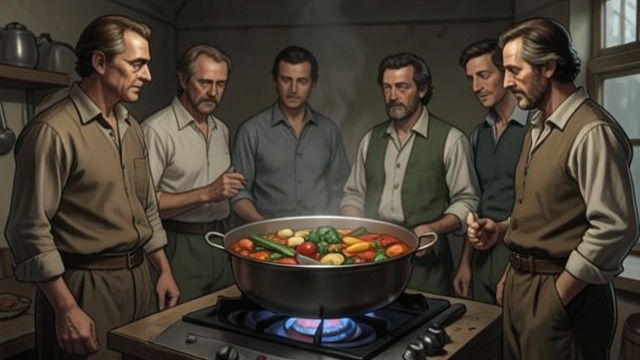
Making the past visible
Leftovers as an explanation
When Levee takes two sandwiches, Toledo calls the musicians leftovers from history and develops the thought into an image of a stew made from the ingredients of different African peoples. The historical mixture has already been consumed, he argues, but its fragments remain in the people shaped by it.
He uses the metaphor to ask what Black people can do with the history that has made them. The point is not that they can simply recover an untouched past, but that they have to recognize what has happened before deciding what comes next.
A difficult argument
Levee mocks the explanation, and Slow Drag asks what eating has to do with white treatment of Black people. Toledo clarifies that he is not claiming the metaphor directly explains every act of discrimination.
His effort nonetheless reveals his conviction that understanding collective history matters. The others’ impatience does not erase the question he raises: people cannot choose a future together if they do not recognize the historical conditions that have shaped them.
An Unfinished Collective Project
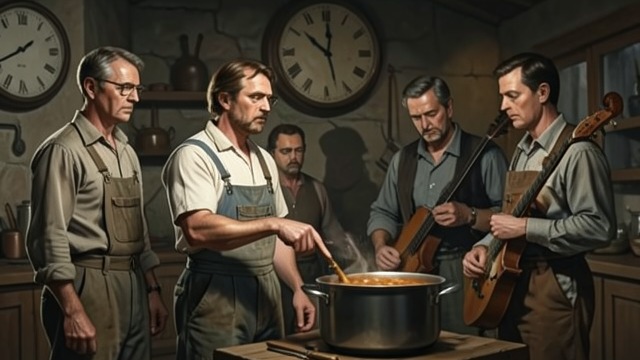
From pleasure to responsibility
Disagreement over a good life
Toledo challenges the idea that having a good time is enough, arguing that Black people should consider the world they will leave to the next generation. Slow Drag defends pleasure as a way to make life worth living, while Levee accuses Toledo of talking without doing anything to improve conditions.
Toledo answers that the responsibility belongs to everyone, not one man acting alone. He speaks in terms of we and insists that collective change requires each person to do a share.
His limits are part of the argument
The exchange does not produce a plan or reconcile the musicians’ different views. Toledo’s analysis can sound abstract to Levee, who demands immediate proof of action, while Toledo sees Levee’s impatience as a refusal to connect ideas to wider conditions.
The debate gives Toledo’s intellectual life a purpose beyond displaying knowledge. He wants his companions to imagine a responsibility larger than individual survival, even though he cannot show them a simple path from recognition to change.
A Fool Who Learns
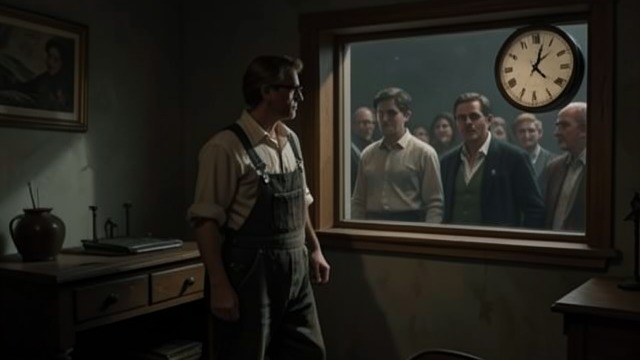
Experience as a source of insight
The marriage he remembers
During a conversation about foolishness, Toledo describes his marriage and the way his wife left after joining a church. He does not call her bad or deny her right to leave; instead, he recognizes that he failed to see what she needed from him.
That account complicates Levee’s insistence that a fool is simply someone who causes trouble for himself. Toledo understands foolishness as an experience from which a person may learn, even if the lesson arrives after the loss.
Refusing to repeat the same mistake
Toledo says that he may be foolish again, but not in precisely the same way. The claim is modest: he does not pretend to have escaped error, only to have gained something from living through it.
This outlook distinguishes him from Levee’s confidence that he can prevent anything from happening to him. Toledo’s acceptance of vulnerability makes him more perceptive, but it cannot protect him from the violence that later overtakes the band room.
A Sudden and Final Blow
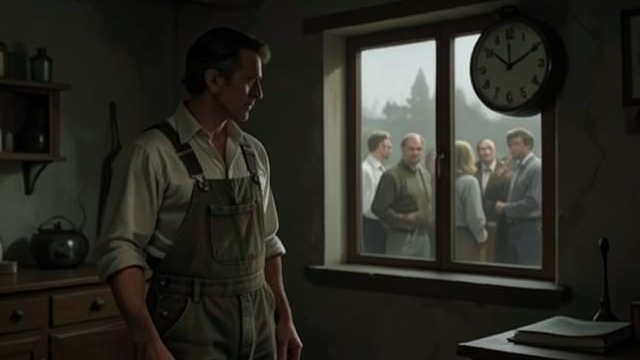
The end of Toledo’s thread
The argument over the shoe
After Sturdyvant refuses to record Levee’s songs, the musicians prepare to leave. Toledo accidentally steps on Levee’s shoe and apologizes, but Levee demands that he look at the damage and refuses to accept the apology as an end to the matter.
Toledo turns back toward packing rather than escalating the confrontation. He tells Levee that the injury is done and asks what more he expects, treating the incident as something that cannot be reversed by anger.
Violence interrupts understanding
Levee spins Toledo around and stabs him in the back. Toledo’s reflective voice, which has repeatedly tried to connect personal experience to a larger history, is replaced by the physical shock of the attack and then silence.
Levee tries to lift Toledo and orders him to close his eyes, but the urgency of those pleas only underscores the finality of what has happened. Toledo’s death ends his effort to teach or interpret, leaving the other musicians to face a rupture that argument can no longer repair.
Early in the session, as the musicians settle into the band room
After the musicians receive sandwiches in the band room
Later in the first act, during the debate about good times
During the musicians’ break after the recording attempt
Near the end, after Sturdyvant rejects Levee’s songs
